
For many service members and veterans, the path to a stable, well-paid civilian career runs through hands-on, technical training. Few trades offer the combination of job security, growth potential, and real-world impact like heating, ventilation, and air conditioning. Choosing VA-approved HVAC courses ensures your hard-earned benefits fund a program that is recognized, career-focused, and aligned with industry standards—so your transition translates directly into rewarding work.
What VA-Approved HVAC Training Means—and Why It Matters
When a program is approved by the Department of Veterans Affairs, it means the training has met criteria that allow eligible learners to use VA education benefits toward tuition and related costs. In practical terms, VA-approved HVAC courses provide a veteran-friendly path into a skilled trade that values mission focus, teamwork, and attention to detail. These programs typically combine classroom theory with extensive lab time, ensuring learning is rooted in real equipment, tools, and field scenarios.
The HVAC field is evolving fast. Electrification, high-efficiency heat pumps, advanced controls, and building performance standards are reshaping what technicians do day to day. A VA-approved curriculum helps you keep pace, often covering core areas like safety, electrical systems, refrigeration cycle fundamentals, airflow and duct design, furnaces, and heat pumps, while building toward recognized credentials. Preparing for the EPA 608 refrigerant certification is common, and some programs align with NATE competencies or local licensing requirements, which can make you more marketable to employers.
Veterans bring strengths that matter on job sites: clear communication, disciplined troubleshooting, situational awareness, and a quality-first mindset. Good HVAC training channels those strengths into practical skills—accurate charging procedures, precise airflow measurement, heat pump commissioning, and furnace diagnostics that reduce callbacks. This is more than theory; it’s repetition on gauges, meters, recovery machines, and smart thermostats until muscle memory takes over. The result is the kind of workmanship customers trust and employers promote.
VA approval also signals student support. Programs accustomed to working with veterans understand how to certify enrollment, schedule around obligations, and guide students through testing and job placement. Many build relationships with local contractors and facility teams, helping graduates step into installation, service, or maintenance roles soon after finishing. In a trade where demand outstrips supply—especially during peak heating and cooling seasons—this bridge from classroom to career is a major benefit.
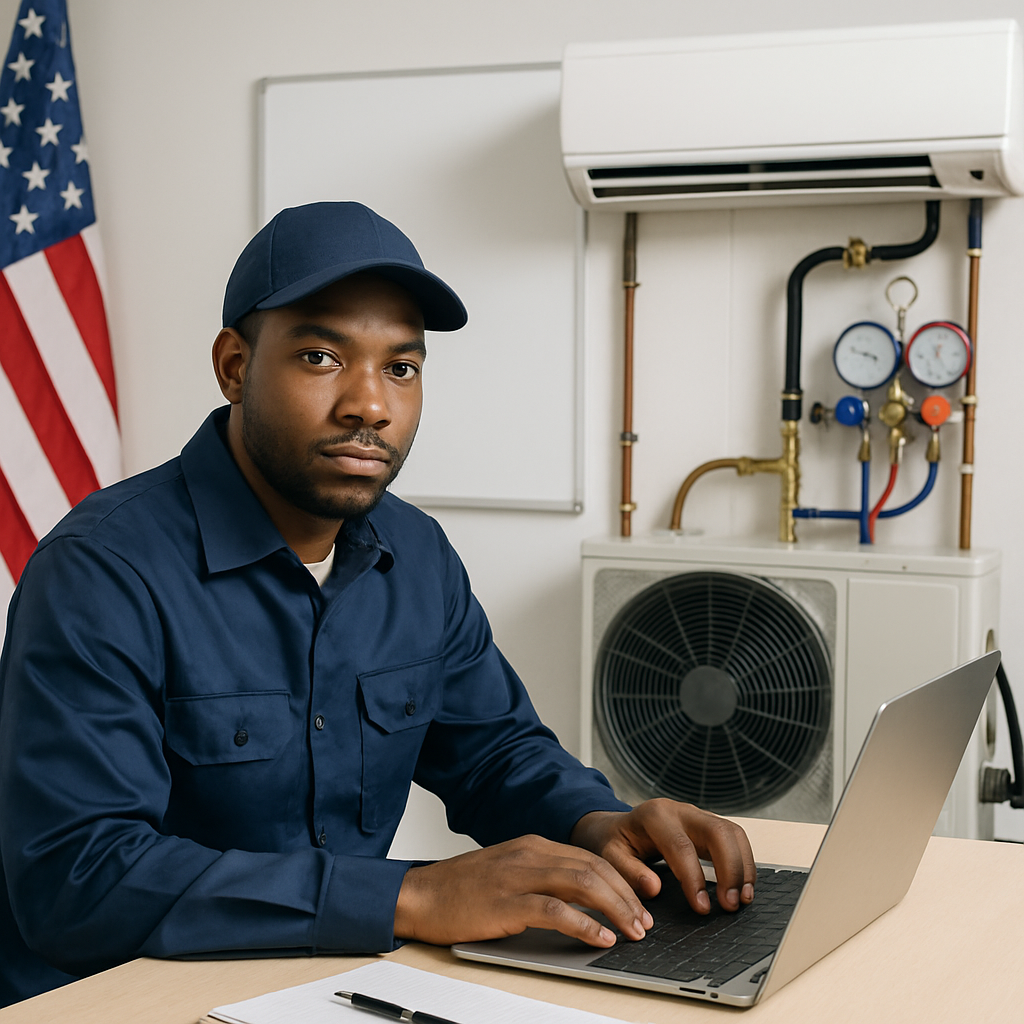
How to Use Your VA Education Benefits for HVAC School
To put VA benefits to work, start by confirming eligibility through the GI Bill or other VA education programs. The Post-9/11 GI Bill typically covers a portion (or all) of tuition at approved programs, along with a book stipend and a housing allowance based on location and enrollment intensity. The Montgomery GI Bill and other options may also apply depending on service history. If you have a service-connected disability, Veteran Readiness & Employment (VR&E) could be another route to fund training and job placement support. While each benefit has distinct rules, the overall path is straightforward.
First, request your Certificate of Eligibility (COE) online or through your regional VA office. Next, identify HVAC programs clearly marked as VA-approved; many schools publish this status, and campus certifying officials can verify it. When you enroll, the school certifies your attendance with the VA. As you progress, maintain satisfactory attendance and academic performance to keep benefits flowing. If life circumstances shift—drill weekends, family duties, or medical appointments—communicate early with instructors and the school’s VA liaison so they can help plan around your schedule.
Consider how program structure fits your goals. Full-time, hands-on courses move quickly and can accelerate job readiness. Hybrid or online modules paired with in-person labs offer flexibility, especially if you’re balancing work or family commitments. For those already employed by an HVAC contractor, VA-supported apprenticeship or on-the-job training options might help you earn and learn simultaneously. These pathways can reduce financial pressure while you gain field experience under a licensed mentor.
It also helps to look ahead at licensing milestones and certifications. Ask whether the curriculum includes EPA 608 exam preparation and testing logistics, how much time you’ll spend on heat pump commissioning and refrigerant diagnostics, and whether there’s support for soft skills like customer communication and job documentation. Programs designed around job performance—not just textbooks—tend to produce graduates who contribute on day one. Many veteran-focused schools emphasize system design fundamentals, airflow measurement, and zoning principles because those skills directly prevent comfort complaints and energy waste.
Finally, compare career services. Strong VA-approved schools network with local residential and light commercial employers, property management companies, and facility teams. Some invite hiring managers to labs for demonstrations or schedule mock interviews. If you’re ready to explore options now, VA approved HVAC courses can provide a clear path from benefits to a career-ready skill set with hands-on, industry-aligned training.
Skills, Certifications, and Career Paths You’ll Build in a Quality HVAC Program
A well-structured HVAC program turns complex systems into a practical workflow you can use anywhere. Training usually starts with safety, electrical fundamentals, and core refrigeration cycle theory. You’ll learn how pressure, temperature, and enthalpy interact in real systems; how to interpret superheat, subcooling, and saturation; and how to connect gauges and digital probes the right way. From there, you’ll progress into residential and light commercial equipment—gas furnaces, air handlers, condensers, heat pumps, and mini-splits—alongside essentials like recovery, evacuation, and charging.
Airflow is a frequent culprit in comfort issues, so robust programs teach how to measure static pressure, set blower speeds, size ducts, and correct restrictions. You’ll work through system design basics—load considerations, supply and return placement, filter selection, and zoning—to understand why quality installation outperforms guesswork. Heat pump technology gets special attention as markets shift toward electrification: defrost strategies, reversing valves, cold-climate performance, and commissioning steps that safeguard efficiency in all seasons.
Hands-on labs are the difference-maker. Expect to trace low- and high-voltage circuits, isolate components like capacitors, contactors, and inducer motors, and use multimeters, manometers, and smart diagnostic tools with confidence. Focused modules in furnace fundamentals help you read flame signals, analyze combustion air, and verify safeties, while refrigerant labs emphasize leak detection, evacuation targets, and charge optimization matched to manufacturer data. The aim is quality you can prove, not just feel.
Certification preparation is integral. Most employers require the EPA 608 credential for refrigerant handling, and many value NATE knowledge areas for service and installation. Some programs incorporate OSHA safety awareness or include prep for local licensing exams. Beyond credentials, soft skills matter: explaining repair options clearly, documenting findings, and setting realistic expectations with customers and dispatch. A strong training culture highlights professionalism and communication as part of every service call.
Career paths are diverse and resilient. New graduates often start in residential installation or maintenance, building a foundation in equipment startup, airflow verification, and customer interaction. As experience grows, service roles open up, followed by light commercial work, building automation support, or specialized niches like hydronics and advanced controls. With leadership skills, technicians can move into field supervision, quality assurance, system design, energy auditing, or training roles. Veterans with proven reliability are especially attractive candidates for team lead and project management positions.
Real-world scenarios show how training translates to results. Think of a heat pump that short cycles after a “like-for-like” replacement: a technician trained in duct diagnostics and commissioning recognizes the undersized return and corrects static pressure, stabilizing operation and cutting energy use. Or consider a furnace lockout that triggers intermittently: electrical and combustion fundamentals guide a step-by-step test path that isolates a failing pressure switch rather than swapping parts. In each case, the difference comes down to structured learning, methodical troubleshooting, and a commitment to quality installation.
Ultimately, the best VA-approved HVAC courses focus on repeatable field excellence. They blend theory with shop practice, system design with service protocols, and technical skills with customer service. For transitioning service members and veterans, that mix turns discipline into a durable, scalable civilian career—one where every season brings new challenges and opportunities to lead.

Muscat biotech researcher now nomadding through Buenos Aires. Yara blogs on CRISPR crops, tango etiquette, and password-manager best practices. She practices Arabic calligraphy on recycled tango sheet music—performance art meets penmanship.

Leave a Reply