
How to Choose the Right Cedar Park Roof Contractor for Lasting Performance
Selecting the best partner for your roof is about more than price quotes; it’s about proven skill in Central Texas conditions. A trusted Cedar Park roof contractor understands how triple-digit summers, intense UV exposure, sudden hail, and high winds accelerate wear on shingles, sealants, and flashing. That local expertise shapes every recommendation—from using impact-resistant shingles and high-temperature underlayments to specifying ventilation that reduces attic heat and protects your roof system long-term. It’s not just a roof; it’s your home or business’s first line of defense against the region’s toughest weather.
Start by verifying credentials and coverage. Your contractor should carry appropriate insurance, follow safety best practices, and be experienced with local building codes in Cedar Park and Williamson County. Look for manufacturer-trained crews and ask about warranties on both materials and workmanship. A strong track record with roof repair, roof replacement, and specialty systems such as metal roofing and flat roofing is a good sign you’re dealing with professionals who can tailor solutions to different roof designs and budgets. References from recent projects in Cedar Park, Leander, Round Rock, or Georgetown help confirm consistent quality and reliable timelines.
Transparency is essential. A reputable contractor provides a detailed scope of work outlining materials, underlayments, flashing details, ventilation improvements, and how penetrations (like skylights or vents) will be sealed. Expect clear start and completion dates, a defined cleanup plan, and communication before, during, and after the job. For storm-related needs—like hail or wind damage—ask how the team documents roof conditions and prioritizes urgent dry-in services to prevent interior damage. The right partner will walk you through inspection findings with photos, explain the reasoning behind their recommendations, and give you options that balance durability and cost-effectiveness.
Finally, consider lifecycle care. A contractor who offers routine inspections and maintenance plans is signaling long-term commitment to the performance of your roof. Biannual checkups, post-storm assessments, and targeted repairs can drastically reduce the likelihood of leaks while extending system life. Whether your property uses asphalt shingles, standing seam metal, or a low-slope assembly, a locally experienced emergency roofing team that also excels in prevention delivers the best value—today and over the years to come.
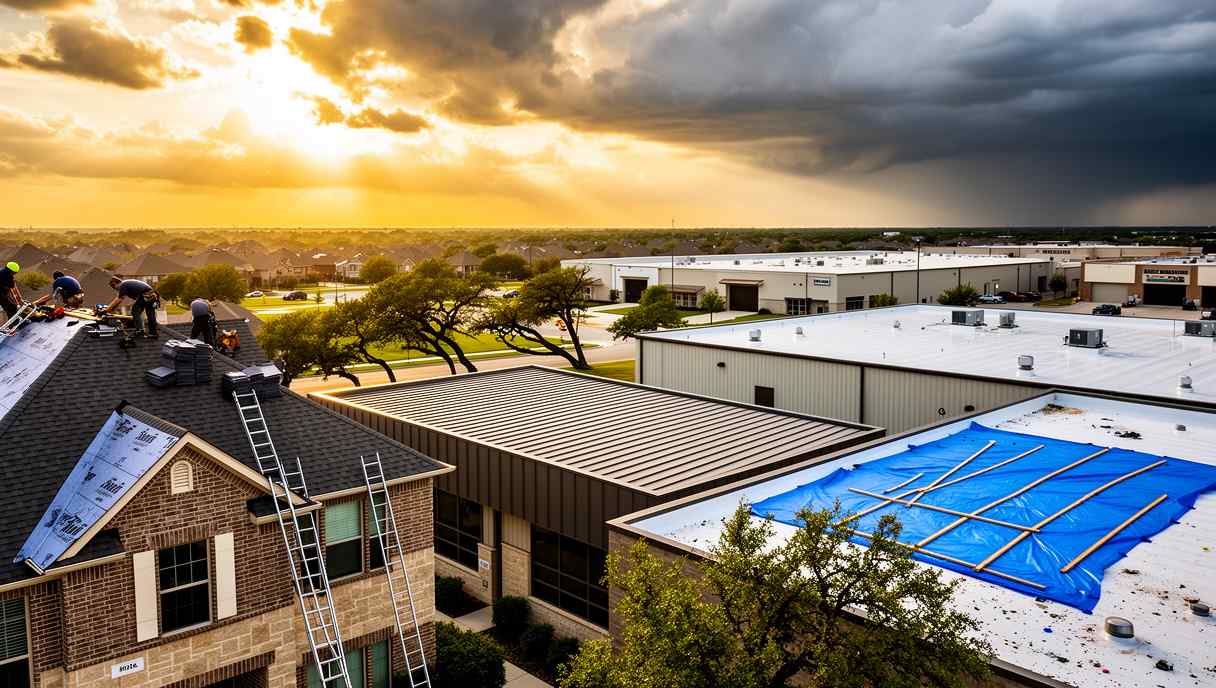
Residential, Commercial, and Industrial Roofing Services Built for Central Texas
A full-service Cedar Park roofing partner covers a wide range of needs: new roof installation, comprehensive roof replacement, precision roof repair, durable metal roofing upgrades, reliable flat roofing solutions, thorough inspections, routine maintenance, and fast emergency support. Residential homeowners in Cedar Park often prioritize curb appeal, impact resistance, and energy-aware designs. That frequently means shingles with high wind ratings, reflective options to minimize heat gain, and attic ventilation that works with radiant heat barriers for better home comfort. Upgraded underlayments and enhanced flashing at chimneys and valleys help defend against wind-driven rain common to summer storms.
For commercial and industrial properties across Cedar Park, Leander, Round Rock, Georgetown, and the broader Austin Metro, priorities shift to system longevity, watertight performance, and minimal operational disruption. A capable contractor plans projects to limit downtime—sequencing tear-offs and installations in manageable phases, coordinating around business hours, and keeping safety at the forefront. On low-slope and flat roofs, robust membrane selection, reliable edge metal, and correct flashing around HVAC curbs and penetrations are critical to resisting uplift and preventing leaks. Regular inspections and proactive maintenance plans catch membrane seams, fasteners, or sealants that may be weakening under UV and foot traffic, reducing emergency calls and extending service life.
Storm-readiness is another essential service scenario. When hail strikes, a responsive team moves quickly with temporary dry-in measures and careful documentation of visible and hidden issues. That includes assessing shingles or panels for impact bruising or dents, inspecting flashing and pipe boots, and checking gutters and downspouts for granule loss that indicates accelerated shingle aging. For wind events, crews look for lifted edges, displaced ridge caps, or compromised seams on flat roofing. If you’re comparing options, a seasoned Cedar park roof contractor provides clear guidance on whether targeted roof repair can restore integrity or if a full system upgrade will deliver better long-term protection and value.
Because Central Texas weather can be unpredictable, the best roofing solutions combine robust materials with smart detailing. That means high-temperature underlayments for steep-slope roofs, reliable leak barriers at eaves and valleys, corrosion-resistant fasteners for metal roofing, and well-designed drainage for low-slope assemblies. With coverage extending through Cedar Park, Williamson County, and surrounding communities, a locally focused team aligns every step—from design and installation to ongoing care—with Texas-tough performance, so your roof is ready when the next heatwave or storm rolls in.
Real-World Examples and Proactive Maintenance for Texas Weather Resilience
Consider a Cedar Park–area home impacted by a spring hailstorm. What looked like minor granule loss on shingles turned out to be widespread bruising and fractured mats upon closer inspection. The solution combined impact-resistant shingles, a high-temp synthetic underlayment, new ridge vents to improve airflow, and upgraded flashing at all critical transitions. The result: better heat management during summer, stronger defense in the next hail event, and fewer worries about wind-driven rain. This kind of targeted system upgrade is common in Central Texas, where a thoughtful mix of materials and detailing can add years to the life of a roof.
On the commercial side, a Round Rock facility with a low-slope roof struggled with occasional ponding and wind-lifted edges after repeated storms. A comprehensive assessment pinpointed aging perimeter metal, clogged drains, and weakened seams as the main culprits. The contractor reinforced edges, restored seams, and improved drainage pathways to move water off the roof quickly. A follow-up maintenance plan scheduled routine cleanings, inspections after major weather events, and immediate attention to small issues—like sealant touch-ups and fastener checks—before they grew into leaks. This combination of repair and prevention helped stabilize operations and protect interior equipment.
Metal roofing offers another compelling example for heat and wind resilience. A Georgetown property opted for standing seam metal roofing to reduce long-term maintenance and enhance reflectivity. By pairing a reflective finish with proper underlayment and reliable fastening patterns, the system stood up well to gusty conditions while helping moderate attic temperatures. Homeowners often notice improved comfort and a more consistent interior climate—critical benefits when Central Texas temperatures soar. For many properties, metal’s durability and wind resistance make it a smart investment over the full roof lifecycle.
Proactive maintenance is the common thread linking these scenarios. A robust plan typically includes spring and fall inspections, plus checks after hail or high-wind events. Crews examine flashing, sealants, and penetrations; verify that ridge, soffit, or mechanical ventilation is performing; look for lifted shingles or loose fasteners; and clear debris from valleys and drains. Documenting conditions with photos and addressing minor issues quickly can prevent leaks, preserve curb appeal, and help protect warranties. When surprises happen, fast emergency roofing support—tarping, temporary dry-ins, and prioritized repairs—keeps buildings safe until permanent fixes are completed. By combining strategic upgrades with ongoing care, property owners across Cedar Park, Leander, Round Rock, Georgetown, and the greater Austin area get roofs that are built for today’s weather and ready for tomorrow’s.

Muscat biotech researcher now nomadding through Buenos Aires. Yara blogs on CRISPR crops, tango etiquette, and password-manager best practices. She practices Arabic calligraphy on recycled tango sheet music—performance art meets penmanship.

Leave a Reply