
What a Baltic Company Database Includes and Why It Matters
A reliable Baltic company database brings the business landscape of Lithuania, Latvia, and Estonia into sharp focus. At its core, it consolidates official registry details—legal names, registration numbers, VAT status, addresses, and legal forms—into standardized profiles. Layered on top are key data points such as sector classifications (often NACE), executive and shareholder information, headcount ranges, revenue figures, and filing history. By stitching these attributes together, professionals gain a single source of truth for discovery, comparison, and verification across three closely connected markets.
For go‑to‑market teams, this unified view transforms research into results. Sales and marketing can filter companies by industry, size, and region—say, tech scaleups in Tallinn, component manufacturers in Kaunas, or logistics firms in Riga—and then align outreach with verified contacts and company context. Product and strategy leaders use the same data to quantify addressable markets, benchmark competitors, and monitor category momentum across the Baltics, all while keeping apples‑to‑apples comparability with shared standards like NACE codes and EU financial metrics.
Risk, compliance, and procurement functions also lean on structured Baltic data. Screening suppliers or partners is faster when registration status, beneficial ownership indicators, and filing histories are centralized and refreshed regularly. Consistent identifiers—national registration numbers, VAT IDs, and, when available, LEI codes—enable precise entity matching and reduce false positives in KYC/AML processes. In a region known for digital governance and cross‑border trade, this precision is essential for scaling due diligence without adding friction.
Crucially, the best datasets trace their lineage to authoritative sources: Lithuania’s Register of Legal Entities, Latvia’s Enterprise Register, and Estonia’s e‑Business Register, supplemented by official gazettes and statistical offices. The difference between raw, fragmented inputs and a curated, normalized database is night and day—especially when you need to reconcile naming variants, multilingual entries, or historical company events. When your goal is to move from “What exists?” to “What matters for this decision?”, curation is the advantage.
Modern platforms elevate this advantage with search, comparison tooling, and integrations that meet teams where they work. Whether conducting one‑off checks, running bulk refreshes, or piping data into a CRM via API, you can accelerate insight while preserving accuracy. If you need a single, searchable baltic company database that balances depth with usability, look for solutions built on standardized EU data and transparent update cycles.
How Teams Use Baltic Business Data: Real Scenarios from Sales to Risk
Consider a B2B SaaS provider launching an account‑based marketing program across the Baltics. With a structured dataset, they can pinpoint Lithuanian manufacturers with 50–250 employees, isolate Latvian logistics firms serving the Port of Riga, and surface Estonian fintechs with active revenue growth. By combining industry codes, revenue brackets, and regional filters, the team builds precise target lists, scores accounts by fit, and aligns outreach cadences with each segment’s pain points.
Exporters and distributors rely on these same filters to identify channel partners and resellers. A medical device company entering Vilnius and Klaipėda can shortlist clinics and wholesalers, check corporate status and financial health, and validate directors before initiating conversations. Because the Baltic states operate within the EU Single Market, standardized identifiers make cross‑border checks straightforward, reducing both onboarding time and counterparty risk.
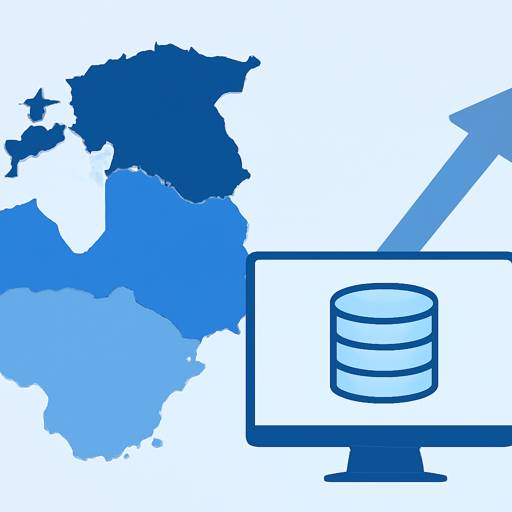
Procurement and supply chain teams use Baltic data to diversify vendors and strengthen resilience. Imagine a furniture brand seeking sustainable wood suppliers with documented certifications and stable filings across Latvia and Estonia. Access to multi‑year financials, workforce size, and location metadata helps evaluate capacity and continuity, while consistent record linking prevents mixing up similarly named entities. The result is a supplier shortlist grounded in evidence rather than guesswork.
Investors and corporate development teams gain an information edge by tracking private company trajectories. Early revenue disclosures, filing patterns, headcount shifts, and sector reclassifications can reveal momentum before major announcements. By comparing peers across Riga, Tallinn, and Kaunas, analysts spot regional champions and hidden gems, then perform diligence that blends registry facts with contextual signals like export activity or sister‑company relationships. A strong Baltic intelligence layer enables faster, more confident term sheet decisions.
Compliance and operations teams benefit from programmatic access. API endpoints let you verify entities in onboarding flows, refresh portfolio company attributes, and maintain clean records at scale. Automated pipelines can flag lapsed registrations, missing VAT numbers, or structural changes (mergers, spin‑offs, director swaps). With robust deduplication and matching logic, organizations curb the cost of bad data—misrouted invoices, failed deliveries, or misaligned sales territories—and keep every downstream system synchronized.
Evaluating Data Quality and Choosing the Right Platform
Selecting a Baltic company database begins with source transparency. Favor providers that cite Lithuania’s Register of Legal Entities, Latvia’s Enterprise Register, and Estonia’s e‑Business Register, then show how filings, gazette notices, and statistical sources are combined. Ask about update cadences and coverage depth: Are micro‑enterprises and NGOs included? How quickly are legal events (incorporations, dissolutions, director changes) reflected? Timeliness is a leading indicator of both reliability and trust.
Normalization and entity resolution are equally vital. The Baltics operate in multiple languages and character sets, which can fragment search and matching. Strong platforms harmonize NACE codes, map historic codes to current ones, and standardize names across transliterations. They also link related identifiers—registration numbers, VAT IDs, and LEIs—so a single company record remains coherent across borders and data products. Look for documented matching confidence scores and the ability to override mappings when domain knowledge demands it.
Depth of attributes determines how far the data can power your workflows. For market analysis, you need financial snapshots, employee ranges, and geography down to municipality or district. For risk work, you want incorporation dates, beneficial ownership indicators where available, filing completeness, and status changes with timestamps. For sales, rich search and filtering plus exports and CRM connectors accelerate execution. The strongest platforms balance breadth with the right grains of detail to answer practical questions swiftly.
Access and integration options turn static data into living intelligence. API endpoints, bulk CSVs or Parquet files, and web interfaces each have roles: programmatic verification, data science pipelines, and human‑led exploration. Validate rate limits, webhook support for change events, and sandbox options for testing. Ensure GDPR alignment, clear licensing, and retention policies. If your team handles high‑volume verification, prioritize systems designed for throughput and accurate, deterministic matching.
Finally, evaluate usability in the Baltic context. Can you filter by city hubs like Vilnius, Riga, Tallinn, and fast‑growing corridors such as Kaunas and Tartu? Is there historical context to track growth and survivability rates? Do search tools handle diacritics and legacy spellings? Are comparison views intuitive for cross‑country benchmarking? When a platform pairs rigorous data engineering with thoughtful UX—and anchors it in EU and EEA standards—you gain a durable edge in finding, qualifying, and collaborating with Baltic companies at scale.

Muscat biotech researcher now nomadding through Buenos Aires. Yara blogs on CRISPR crops, tango etiquette, and password-manager best practices. She practices Arabic calligraphy on recycled tango sheet music—performance art meets penmanship.

Leave a Reply